ACT, Community, Recycling, Media Release
Outgrown but not thrown out


Only words with 2 or more characters are accepted
Max 200 chars total
Space is used to split words, "" can be used to search for a whole string (not indexed search then)
AND, OR and NOT are prefix words, overruling the default operator
+/|/- equals AND, OR and NOT as operators.
All search words are converted to lowercase.
The whole picture - with just a single click. Find out here where our branches are located, what services they offer and how to contact them.
Discover the world of REMONDIS with its 1500+ branches and associated companies in more than 30 countries across Europe, Africa, Asia and Australia.


REMONDIS Australia // 14 August 2026

By October 2025, the program had scaled to 24+ tonnes monthly, demonstrating immediate impact and continued growth

Food tenancies achieved the strongest gains, with some retailers reducing organic waste sent to landfill by up to 70%

Canberra Centre launched FOGO well ahead of predicted ACT legislation, positioning itself as a retail leader rather than playing catch-up
CASE STUDY
Canberra Centre is the major retail hub of Canberra’s CBD, with over 400 retailers. Centre owner, QIC is a long-standing partner of REMONDIS, known for setting ambitious environmental targets across its retail portfolio.
At Canberra Centre, that commitment translated into a proactive decision: introduce FOGO (Food Organics and Garden Organics) recycling ahead of anticipated ACT legislation – building on NSW's FOGO mandate – to drive measurable waste diversion and promote a circular economy.
Together, QIC and REMONDIS delivered a tailored organics recycling solution designed to reduce contamination, improve dock conditions and futureproof the Centre’s waste strategy.
The Challenge
When REMONDIS commenced the contract, Canberra Centre had not yet introduced organics recycling. Food tenancies were generating significant volumes of organic waste that were going directly to landfill.
At the same time, NSW had mandated food organics recycling for commercial businesses from 1 July 2026, with the ACT expected to follow. Canberra Centre was clear in its objectives:
There was also a broader sustainability imperative. Organic waste sent to landfill generates greenhouse gases. By contrast, when processed correctly, food organics can be converted into nutrient-rich compost and livestock feed that supports healthy plant growth and agriculture.
In practical terms, composting one tonne of organic waste can reduce greenhouse gas emissions by up to 1.3 tonnes of carbon dioxide equivalent – a compelling opportunity for a centre of this scale. The challenge was not just introducing a new waste stream. It required:
The solution had to be practical, scalable and easy for tenants to adopt.
Delivering change required careful dock planning, retailer engagement and practical infrastructure that made separation easy.
The REMONDIS Solution
A detailed assessment mapped food retailers, kiosks, restaurant zones and dock locations, ensuring organics bins were positioned where they were needed most.
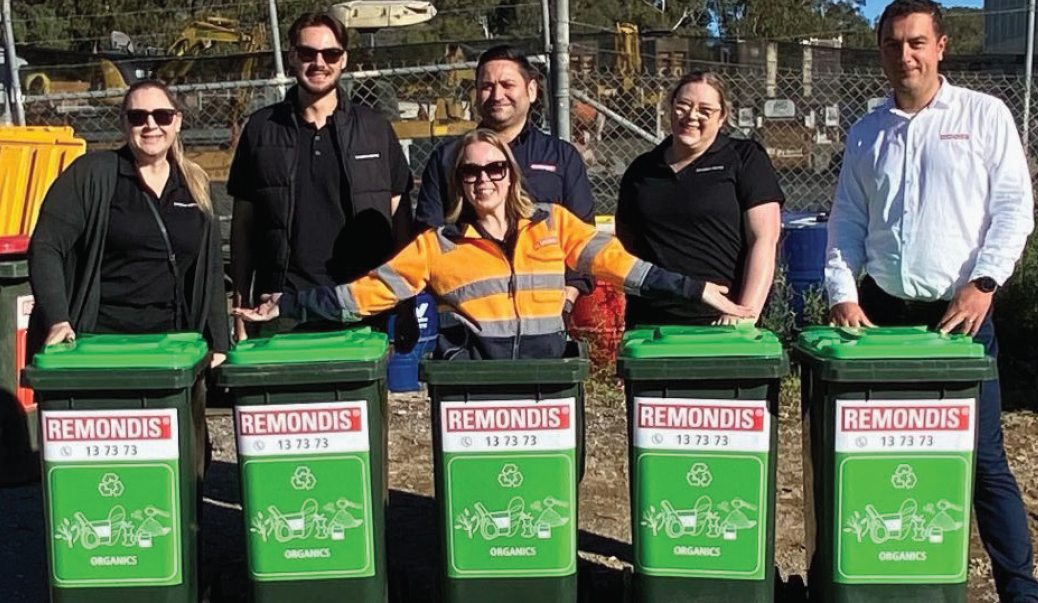
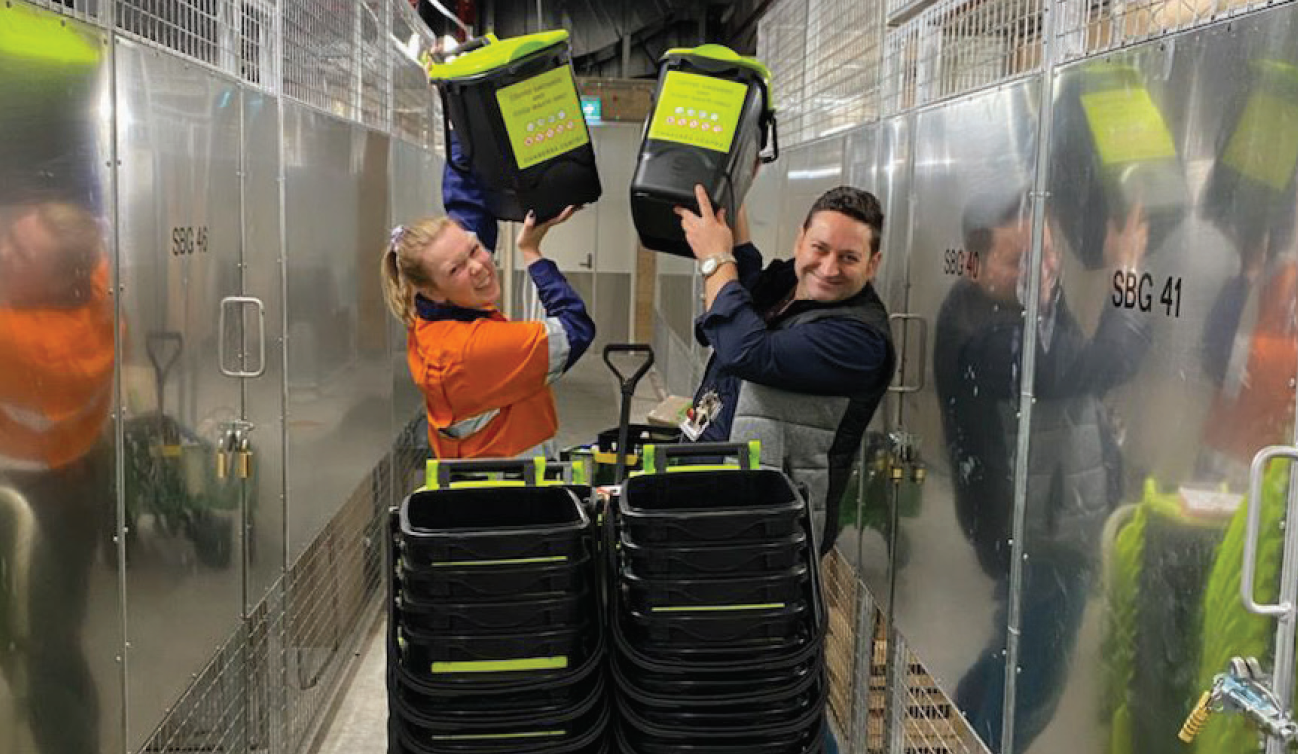
Retailers were provided clearly labelled 26L organics caddies or 120L organics bins. Where space was limited, multiple smaller caddies were supplied for decanting into shared larger bins. The approach intentionally allowed for initial oversupply, with the option to scale back if required – ensuring there were never too few bins to support participation.
QIC’s National Operations Waste Lead and Centre team were immediately supportive. Drawing on experience from other assets, including Castle Towers in NSW, REMONDIS tailored a site-specific rollout for Canberra Centre.
Education was central to success. A dedicated REMONDIS Waste Support Officer visited food retailers to discuss separation practices and identify opportunities to improve diversion. A clear, easy-to-read information sheet outlined existing waste streams, equipment in place and what was changing, ensuring retailers, cleaners, security and maintenance teams understood their role.
Launched in April 2025, the program was designed as a foundation for continuous improvement, with ongoing monitoring and exploration of additional recyclable streams.
The Result
The impact was immediate. Eleven tonnes were diverted from landfill in the first month of operation in May 2025. By October 2025, monthly diversion had grown to more than 24 tonnes and continues to increase.
Food tenancies delivered the strongest gains, with substantial volumes of organics redirected from general waste. The benefits extend beyond diversion rates:
Data from participating tenants indicates further opportunities to reduce landfill volumes, and Canberra Centre remains committed to ongoing optimisation. Crucially, the programme means Canberra Centre has introduced a FOGO scheme well ahead of where legislation for the ACT is predicted to go – putting it on the front foot rather than playing catch-up.
Through strategic planning, on-site engagement and a collaborative partnership, QIC and REMONDIS have positioned Canberra Centre as a retail leader in organics recovery – not just ready for the next stage of sustainable waste management, but already there.
Media enquiries
Repute Communications
Matthew Watson
M +61 417 691 884