National, Community, Recycling, Video, Education
Never bin your batteries


Only words with 2 or more characters are accepted
Max 200 chars total
Space is used to split words, "" can be used to search for a whole string (not indexed search then)
AND, OR and NOT are prefix words, overruling the default operator
+/|/- equals AND, OR and NOT as operators.
All search words are converted to lowercase.
The whole picture - with just a single click. Find out here where our branches are located, what services they offer and how to contact them.
Discover the world of REMONDIS with its 1500+ branches and associated companies in more than 30 countries across Europe, Africa, Asia and Australia.

COMMUNITY
REMONDIS Australia // February 2026

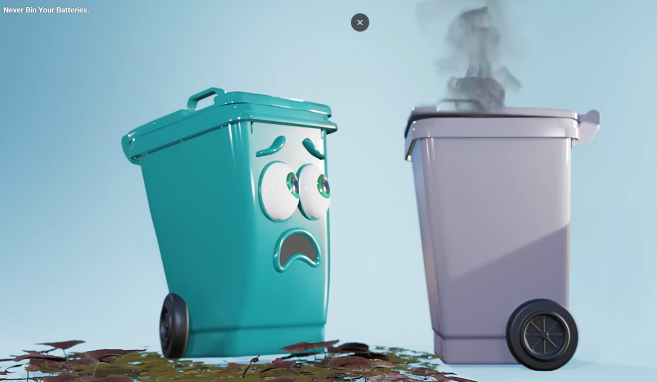
Improperly disposed batteries can ignite in collection trucks or recycling facilities, putting workers and communities at risk

Taping terminals and using fire-resistant containers reduces the risk of fire

Take used batteries to accredited B-cycle drop-off points across Australia for safe, responsible recycling
COMMUNITY
Batteries are an integral part of modern life, powering everything from household electronics to e-bikes and power tools… and the risks associated with improper disposal are growing rapidly.
Across Australia, waste and recycling operators are seeing the real-world consequences of batteries being incorrectly placed in household bins. When damaged or compacted, batteries can ignite, causing fires in collection trucks, at material recovery facilities and landfills. These incidents put workers, infrastructure and communities at risk.
That’s why this clear message from the Battery Stewardship Council, councils and industry bodies nationwide can't be said too often: never bin your batteries.
Batteries don't belong in household bins. Batteries contain hazardous materials — including, in many cases, lithium — which can overheat or combust when crushed, exposed to moisture or short-circuited. When placed in general waste or recycling bins, batteries significantly increase the risk of fires during collection and processing.
For waste and recycling workers, these fires are not theoretical. They are a daily operational hazard that can result in serious injury, environmental damage and costly service disruptions.
Until batteries can be recycled, these simple steps can greatly reduce the risk of fire:
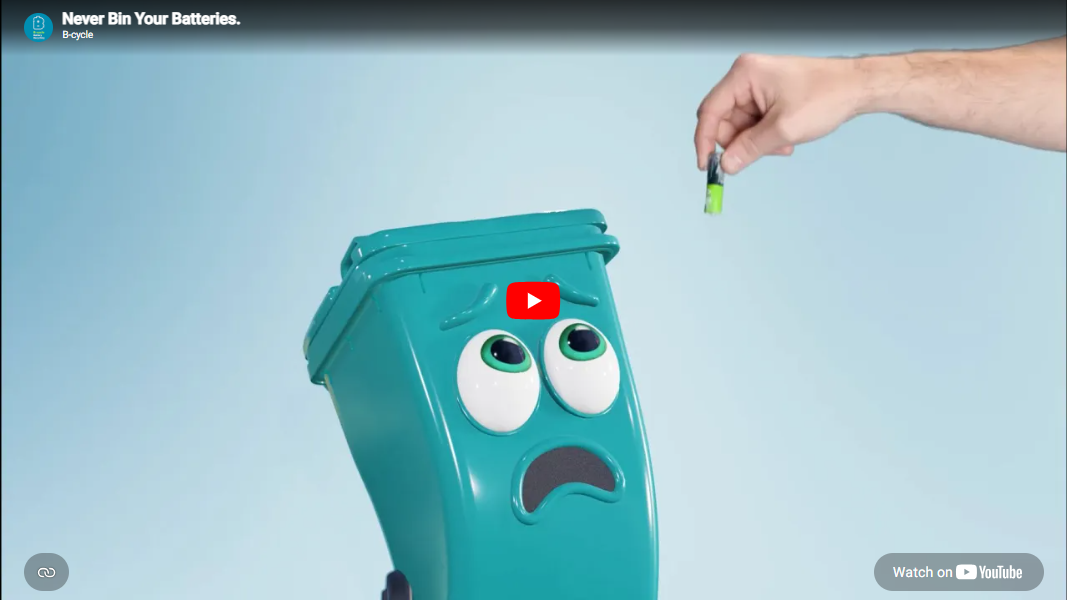
The charming video from B-cycle explains why batteries should never be placed in household bins, and demonstrates the simple steps we can take — such as taping battery terminals, storing them safely, and taking used batteries to accredited B-cycle drop-off points — for responsible recycling.
Australia’s official battery recycling program, B-cycle, provides accredited drop-off points nationwide for the safe collection and recycling of household batteries. The scheme is administered by the Battery Stewardship Council and is supported by government, industry and local councils.
Most common household batteries — including AA, AAA, C, D, 6V, 9V and button batteries — can be recycled through B-cycle locations. Rechargeable batteries are also accepted. Other battery types, such as those embedded in electronics or vehicles, should be recycled through dedicated e-waste or specialist programs.
Using accredited drop-off points ensures batteries are handled safely and responsibly at end of life.
The message around battery safety is being amplified across the country, with strong advocacy from industry bodies including the Waste Management and Resource Recovery Association of Australia (WMRR), councils and stewardship organisations. REMONDIS supports this collective effort, reinforcing community education and speaking up for safer workplaces and safer communities.
As battery use continues to rise, responsible disposal is no longer optional — it’s essential.
B-cycle Battery Recycling Scheme
About the Battery Stewardship Council (B-cycle)
Media enquiries
Repute Communications
Matthew Watson
M +61 417 691 884
QLD, SA, National, Collection, Industrial Services, Medical, Processing, Recycling, Article, Education
Aged care waste management, simplified