National, Community, Innovation, Announcement
Young Professional of the Year


Only words with 2 or more characters are accepted
Max 200 chars total
Space is used to split words, "" can be used to search for a whole string (not indexed search then)
AND, OR and NOT are prefix words, overruling the default operator
+/|/- equals AND, OR and NOT as operators.
All search words are converted to lowercase.
The whole picture - with just a single click. Find out here where our branches are located, what services they offer and how to contact them.
Discover the world of REMONDIS with its 1500+ branches and associated companies in more than 30 countries across Europe, Africa, Asia and Australia.

REMONDIS Australia // May 2026

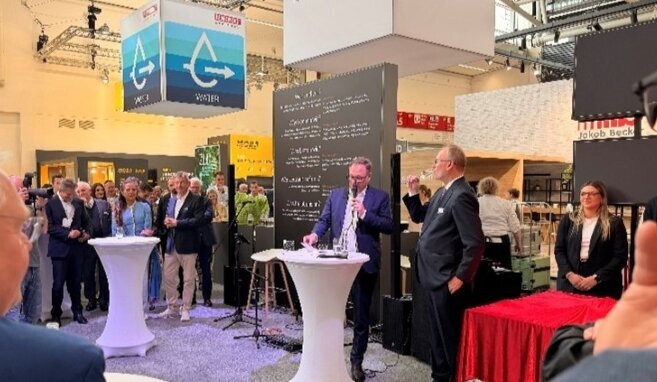
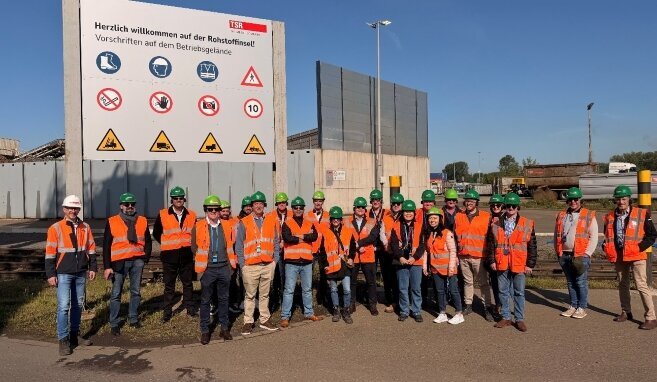
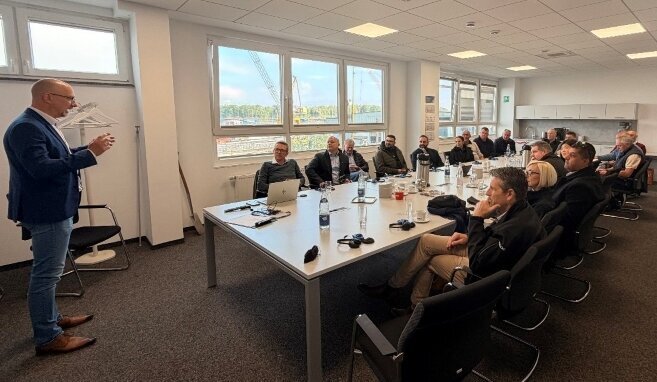
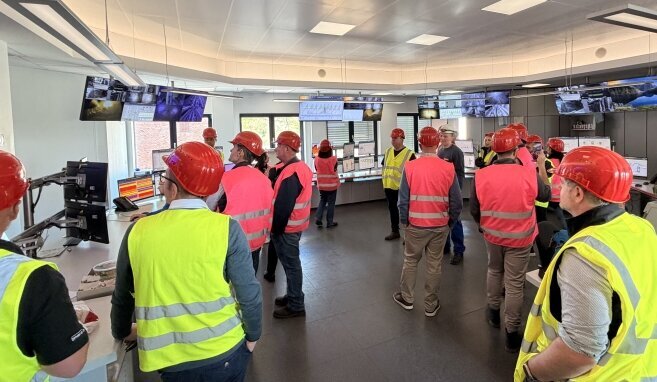
In May 2026, REMONDIS Australia hosted a delegation of clients and partners at IFAT Munich before embarking on a tour of REMONDIS Group facilities in Germany

What they saw challenged assumptions, shifted perspectives, and demonstrated what a genuine circular economy looks like at industrial scale

The conversations that began on this trip are continuing, and we look forward to building on them
There is a version of the waste management conversation that most of us in Australia have been having for years. It involves targets, tonnages, compliance frameworks, and the slow creep of landfill levies. It is an important conversation. But it is also, in many ways, a conversation conducted at a distance from the thing itself — from the actual infrastructure, technology, and industrial ambition required to move beyond landfill as a default.
This year, we decided to close that distance.
In May 2026, REMONDIS Australia invited a group of valued clients and industry partners to join us in Munich for IFAT – the world's leading trade event for water, waste, and raw materials management – and then to travel with us across Germany for a series of site visits to REMONDIS Group facilities. The purpose was straightforward: to show, rather than tell, what resource recovery looks like when it is pursued with genuine commitment, at scale, over decades.
The trip exceeded every expectation.
IFAT Munich: The world's stage for waste and resource management
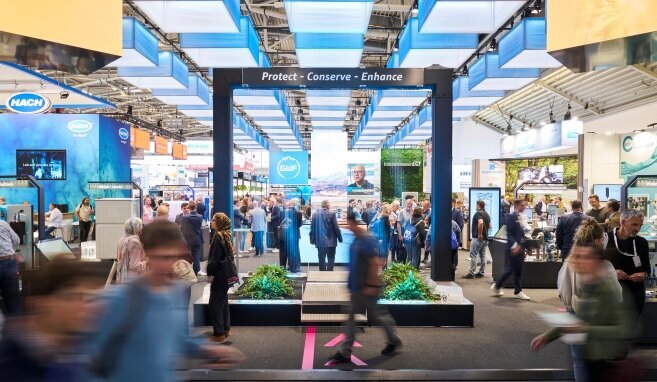
IFAT Munich is unlike any other event in our industry. With more than 3,000 exhibitors from across the globe, it brings together the full spectrum of technology, innovation, and expertise in water, waste, and raw materials management. REMONDIS has been a major presence at IFAT for decades, and 2026 was no different – the Group was among the event's principal exhibitors, with a substantial presence across the exhibition floor.
For our Australian guests, many of whom were attending IFAT for the first time, the experience was immediately striking. The sheer scale of innovation on display, from advanced sorting and separation technologies to energy recovery systems and digital waste management platforms, offered a compelling picture of where the global industry is heading, and how far there is still to travel in the Australian context.
The delegation
The tour brought together a remarkable cross-section of the Australian waste and resources sector.
Hosting on behalf of REMONDIS Australia were Ishrar Ali, Nathan Radley, Conan Hookings, Conor Flynn, Martin Kocybik, Stefan Dittrich, and Poya Assadi, joined in Germany by Bjoern Becker.
Joining as guests were: Paul Stow and Imran Darwiche (Stows); Timothy Piper from Ai-Group; Greg Tahan and George Toghian (IKON); Brett Lemin, CEO of WCRA; Monique Bachtis (JJs Waste & Recycling); Matthew Dickens from Corio Waste Management; Nick Farrell and Adrian Dews (Polpure Resources); Yuli Candiago and LiHui Gan (Environmental Verification); Kerry Hall (HLW Group); Murray Webb (Tambo Waste); and representatives from Brisbane City Council.
Our guests represented owners, managing directors, general managers, and senior executives from across the waste collection, recycling, industrial services, and local government sectors. Together, they brought a breadth of operational experience and commercial perspective that made for rich conversations throughout the tour.
TSR Duisburg: Scrap metal recycling as industrial infrastructure
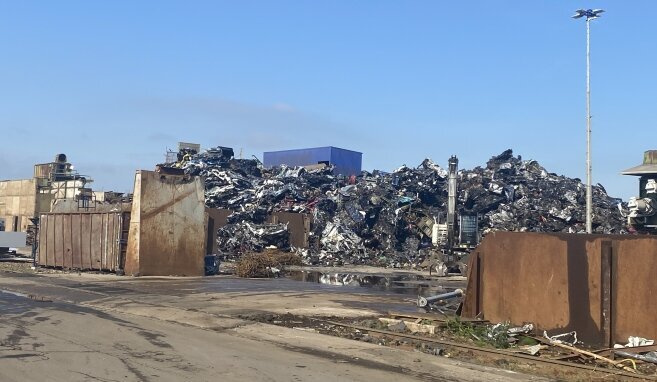
The first facility visit set the tone for everything that followed. Located on the Schrottinsel — ‘the Scrap Island’ — in the Port of Duisburg, the TSR facility covers approximately 130,000 square metres and is considered one of the largest scrap metal recycling sites in Europe.
Every year, hundreds of thousands of tonnes of scrap metal are processed here into high-purity secondary raw materials that feed directly into the production of green steel. The contribution to more climate-neutral industrial manufacturing is not abstract – it is measurable, contracted, and operationally critical.
What made the deepest impression on the group was learning that TSR Duisburg manages the daily scrap deliveries to the ThyssenKrupp steelworks on a just-in-time basis, fully integrated into the production schedule of one of Europe’s great steel manufacturers. Without these deliveries, the steelworks cannot operate. Scrap metal recycling, in other words, is not peripheral to heavy industry – it is load-bearing.
With around 4,600 employees, processing 8.7 million tonnes of ferrous and non-ferrous metals and e-waste annually, and an annual turnover of around €5 billion, the TSR Group is a dominant force in European metal recycling. The Duisburg visit, with thanks to host Andreas Wiemann, gave our Australian guests a vivid sense of what resource recovery looks like when it operates at the intersection of environmental responsibility and hard industrial necessity.
GMVA Oberhausen: Energy from waste, done properly
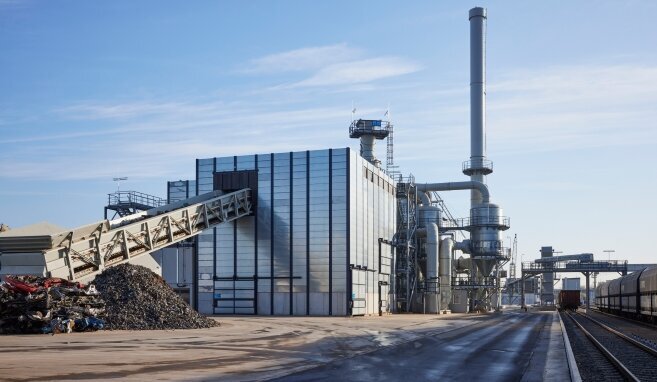
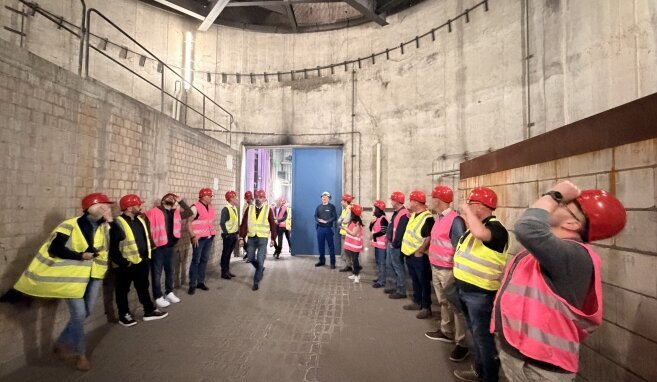
The second site visit took the group to GMVA in Oberhausen – an energy from waste facility that has been operating for more than 50 years and processes approximately 700,000 tonnes of waste per year.
GMVA was originally established in 1972 through the conversion of a former coal-fired power plant, a transition from fossil energy to resource recovery that reads, in hindsight, as quietly visionary. Today it operates with state-of-the-art flue gas cleaning and thermal treatment technology, meeting the most stringent environmental standards in Europe.
The numbers alone are striking: more than 420,000 MWh of electricity generated annually, more than 340,000 MWh fed into the grid, and more than 150,000 MWh supplied as district heating – enough to serve around half of Oberhausen’s 100,000 households with renewable energy. The district heating contribution alone is equivalent to saving approximately 25 million litres of heating oil each year.
But the visit was about more than output figures. What our host and guide Timon Kraus demonstrated to the group was the philosophy behind it – the determination to extract value from every waste stream, including those that cannot be recycled materially. Energy from waste, properly executed, is not a concession. It is the final, responsible step in a hierarchy of recovery.
Imran Darwiche, General Manager at Stows Waste Management and one of our tour guests, captured this vividly when he wrote about the experience afterwards. The GMVA facility, he noted, began life as a coal plant in 1968 and was transformed by regulation – it now exceeds European emissions standards while operating next to a residential neighbourhood, and imports waste from neighbouring countries for treatment. His pointed observation: “Australia is still debating whether waste-to-energy belongs here.”
Lippewerk Lünen and beyond
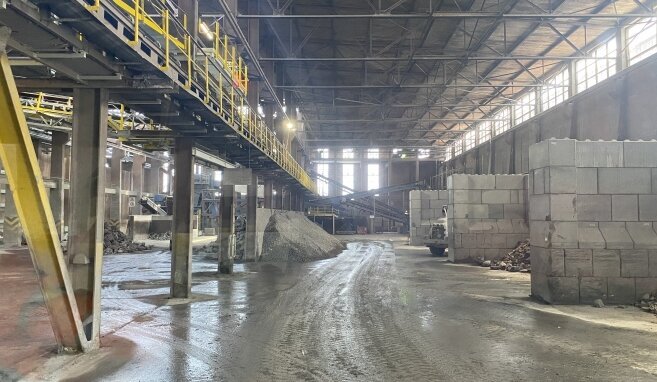
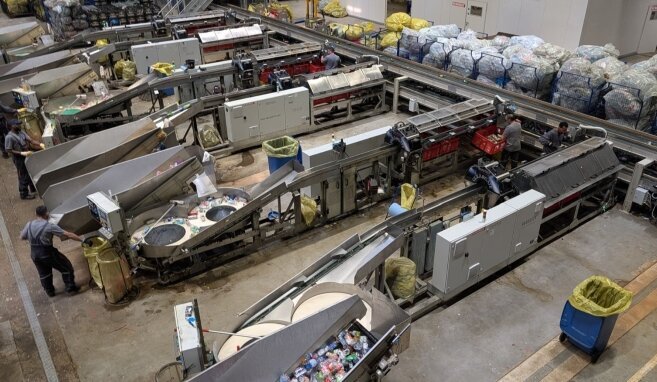
The tour also included visits to the ReFood organics processing plant, the MAV bottom ash recycling facility in Lünen – which alone reduces Germany’s total landfill rate by more than three percent – and the crowning stop of the entire trip: the REMONDIS Lippewerk in Lünen, Europe’s largest industrial recycling centre.
Our tour of the Lippewerk was led personally by Silvio Löderbusch, Managing Director of REMONDIS Production GmbH.
Spanning 230 hectares and employing around 1,600 people, the Lippewerk is not a single recycling facility. It is an integrated industrial circular economy park, where mineral, organic, metallic, plastic, chemical, and energy-rich material streams are processed in sequence, with outputs from one facility becoming inputs for the next. Approximately 700 to 800 trucks enter the site every day. Annual CO₂ savings run to approximately 450,000 tonnes.
Imran summed up its defining logic in a single sentence that has stayed with us: “Nothing is waste – it’s a material waiting for the right process.”
For the Australian visitors, it was a defining moment of the trip – a tangible answer to the question of what genuine industrial-scale recycling infrastructure looks like when it has been built, refined, and expanded over decades with serious intent.
What we brought home
The feedback from our guests was, without exception, positive. Imran Darwiche wrote:
“What stayed with me wasn’t any single technology. It was the integration. Every output feeds the next. Incinerator powers the plant. Ash goes to construction. Food waste becomes fertiliser. Dead batteries become research. That’s a mature circular economy – not a policy document, a place you can walk through.”
He added something that we think speaks for the group:
“The conversations on that bus were just as valuable as the sites. The relationships built on this trip are what I’ll take most from it. In this industry, that’s where everything starts.”
That reframing is precisely why we made the trip.
REMONDIS Australia’s goal is not to transplant the German model wholesale into an Australian context. Regulatory environments differ. Markets differ. Infrastructure maturity differs. But the underlying conviction – that waste streams represent resources, that landfill is a failure of imagination as much as infrastructure, and that the highest possible level of recovery is always worth pursuing – translates without qualification.
We are grateful to every guest who made the journey with us, and to the REMONDIS Group colleagues in Germany – including REMONDIS Australia CEO Bjoern Becker – who hosted the delegation with such generosity and expertise. The conversations that began on this trip are continuing, and we look forward to building on them.
Media enquiries
Repute Communications
Matthew Watson
M +61 417 691 884